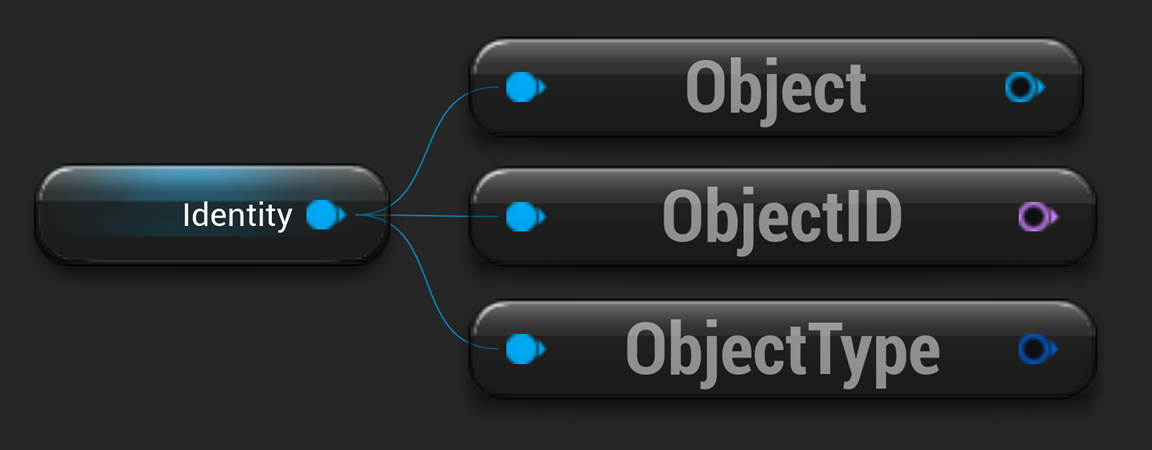
Identity
Identity
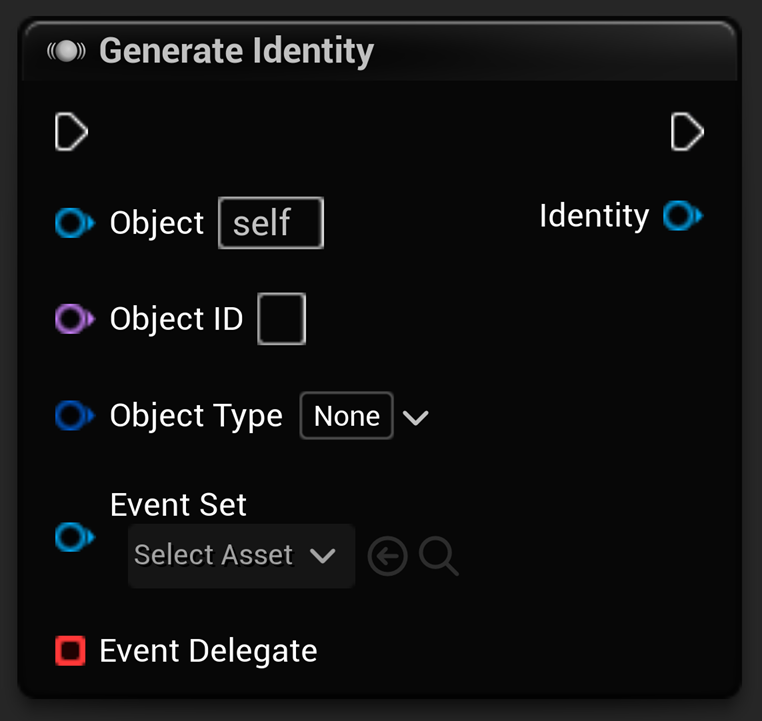
Section titled “Identity”Any object that wants to generate or listen for AES Events needs an Identity. An Identity can be created by calling the Generate Identity function.
Fields
Section titled “Fields”Object
Section titled “Object”The owning UObject/Actor. Exposed so payload handlers can pull back the source object if needed.
Object ID
Section titled “Object ID”Unique string identifying this Identity instance. Leave blank to auto‑assign a GUID.
Used for Focus registrations: listeners can subscribe to events only from a broadcaster with a matching Object ID.
Object Type
Section titled “Object Type”A single Gameplay Tag describing category (e.g. Animal.Chicken). Enables Type registrations: “listen to any broadcaster whose type tag equals X”.
Example: If a Chicken (tag Animal.Chicken) generates a New Egg event, listeners registered for that type receive it. A Dragon with tag Creature.Dragon firing the same event would be ignored by those type‑constrained listeners.
Event Set
Section titled “Event Set”An Event Set is a data asset that can be passed in during the Identity generation to automate registration for a collection of events.
Event Delegate
Section titled “Event Delegate”The Event Delegate is a callback that will handle all of the events passed in with the Event Set.
Replication Note
Section titled “Replication Note”Server + client each generate their own GUID when you don’t supply an explicit Object ID. That’s intentional—AES does not auto replicate Identities. If you need stable cross‑wire correlation, assign an explicit ID yourself.
Fetching Values
Section titled “Fetching Values”From a payload you can fetch:
- Source Object
- Object ID
- Object Type Tag